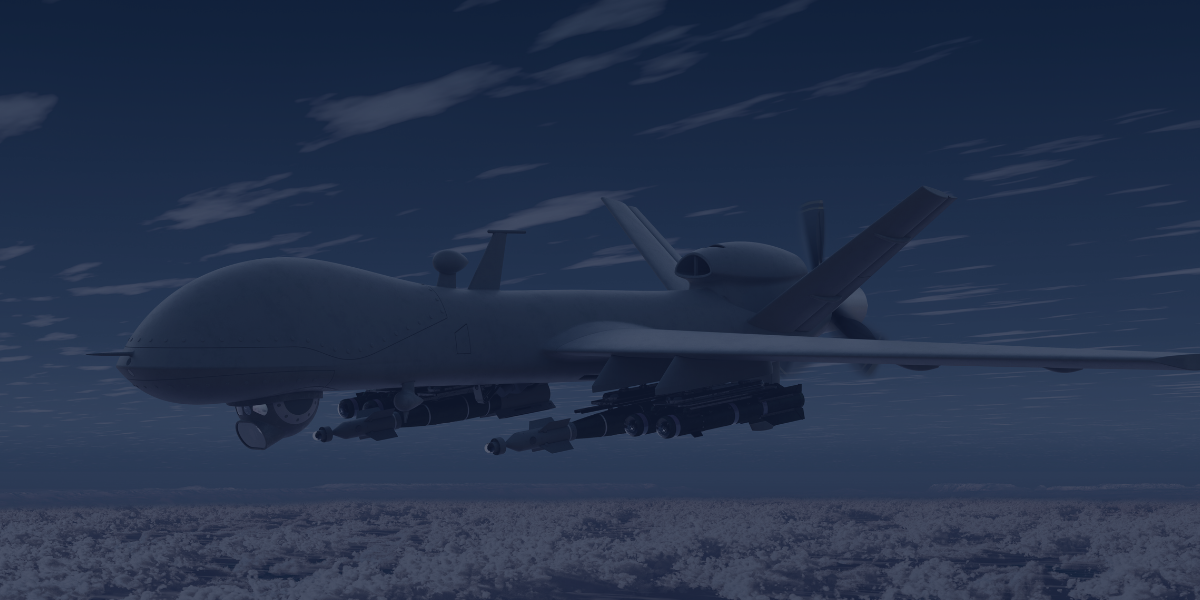
When people picture AI in defense, they usually imagine automated drones, robotic soldiers, or high-stakes scenarios at the edge of conflict. But generative AI’s biggest impact today isn’t on the front lines at all but in the workflows, decisions, and systems behind every mission. From accelerating acquisition to simplifying complex engineering problems, AI has become a force multiplier for the teams who support warfighters long before they ever step onto a battlefield.
In a recent episode of Exploited: The Cyber Truth, RunSafe Security CEO Joseph M. Saunders and Ask Sage’s Arthur Reyenger joined host Paul Ducklin to discuss how AI is transforming mission readiness. But instead of focusing on sci-fi scenarios, their conversation looked at the ways AI is supporting behind the scenes.
Generative AI Is Solving an Age-Old Defense Problem: Time
For decades, defense teams have struggled under the weight of processes, documentation, testing requirements, and the sheer volume of data needed to support modern missions. Whether you’re analyzing electromagnetic spectrum threats, vetting new technology, or validating weapons systems, the bottleneck is almost always the same: time.
That’s exactly where generative AI is already having an outsized impact.
Organizations are using AI to speed up tasks that previously slowed entire programs—think requirements gathering, testing cycles, red-team scenario planning, and acquisition paperwork. Reyenger described one real-world deployment where a combat command used generative AI to evaluate new technologies faster:
“We saved them 95% of the time and the cost to be able to go through those processes.”
That kind of acceleration doesn’t just make workflows cleaner—it moves capability into the field when warfighters actually need it.
The Real AI Revolution Is Happening in Engineering, Logistics, and Maintenance
If there’s a misconception about AI in defense, it’s that its greatest value lies in autonomous weapons. In reality, AI is transforming less glamorous, but mission-critical areas like code development and sustainment.
Saunders emphasized that AI is already reshaping how embedded systems and defense software are built. Instead of teams getting buried in boilerplate code, AI handles the repeatable pieces, letting engineers focus on architecture, performance, and security. The result is faster innovation and more secure systems.
Another example comes straight from the U.S. Navy. Ships equipped with 3D printers previously had to request schematics and documentation from shore through slow, satellite-connected networks. Now, generative AI models running locally can help crews identify the right parts, understand dependencies, and produce what they need instantly, even while offline.
This is the kind of operational lift that rarely makes headlines but changes everything. Missions recover faster. Readiness improves. Warfighters stay effective in environments where bandwidth, connectivity, and time are scarce.
A Future of Responsible, Secure, Human-Centric AI
As the Department of Defense continues to adopt AI, one principle remains non-negotiable: humans stay in the loop. The most powerful applications of generative AI are the ones reducing cognitive load so people can make better decisions.
Reyenger captured this well when discussing how AI fits into modern workflows:
“Technology should not be dictating the way that organizations define their workflows. It should be supporting them. If you’re doing it a certain way, it was because it was right at a time.”
This mindset also extends to the cybersecurity and model-security challenges surrounding AI. Ask Sage’s “fire-and-forget” architecture, for example, ensures sensitive data doesn’t persist inside models—an essential requirement for defense environments where security, privacy, and zero-trust principles are table stakes.
As Saunders emphasized in the episode, the goal isn’t just choosing the best foundation model today. It ensures defense teams aren’t locked into a single vendor or platform, and that AI remains flexible enough to evolve with the mission.
Final Thought: AI Isn’t Making Warfighters More Robotic — It’s Making Them More Human
The more generative AI takes on repetitive work—documentation, analysis, testing, search, troubleshooting—the more time experts can spend on creativity, strategy, and judgment. And that’s where warfighters deliver their greatest value.
AI’s impact in defense isn’t about the machines. It’s about freeing people to think, decide, innovate, and act faster and with more confidence.
Listen to the full episode here.