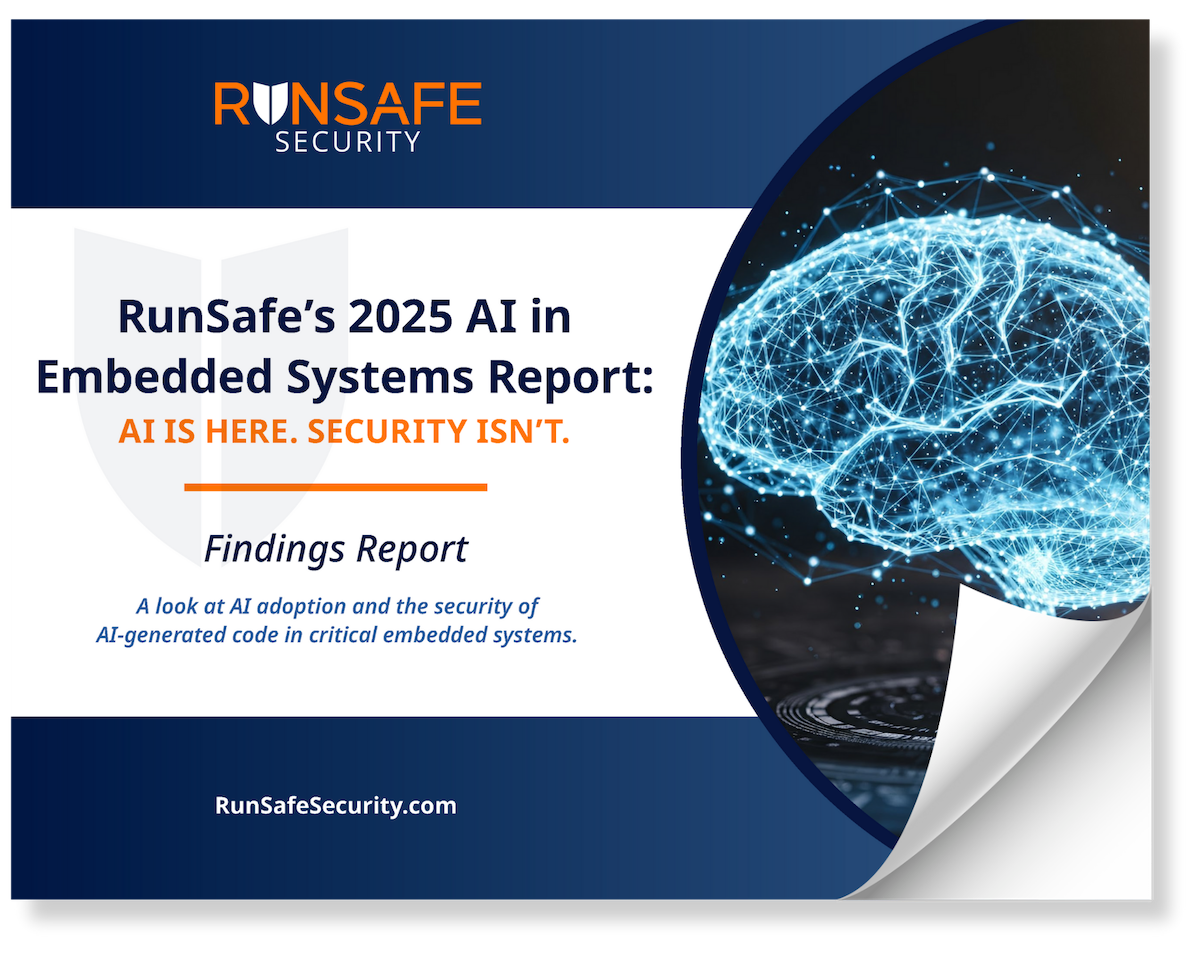
Download RunSafe’s 2025 AI in Embedded Systems Report
This year’s report reveals that AI is here to stay. However, security still has catching up to do.
AI has moved from experimentation to everyday use in embedded systems. Teams are now relying on AI-generated code in products that run medical devices, industrial equipment, vehicles, and energy systems. But the security practices surrounding that code need to evolve to keep pace.
This report shares insights from more than 200 embedded systems professionals working across critical infrastructure sectors. It examines how AI is being used in embedded development today, the risks teams are seeing, and the security gaps that remain as AI-written code moves into production.
The 2025 AI in Embedded Systems Report highlights the challenges, trade-offs, and priorities shaping the next phase of embedded security and where organizations need to focus to keep critical systems safe.
Key Findings At-a-Glance
80.5% currently use AI tools in embedded development
83.5% have already deployed AI-generated code to production systems
53% cite security as their top concern with AI-generated code
73% rate the cybersecurity risk of AI-generated code as moderate or higher
33.5% experienced a cyber incident involving embedded software in the past year
93.5% plan to increase AI usage over the next two years
91% plan to increase investment in embedded software security
What’s Inside the Report
The state of AI adoption: How teams across medical, automotive, industrial, and energy sectors are integrating AI into development workflows
Security concerns and confidence gaps: Why professionals worry about AI-generated code even as they deploy it at scale
Runtime resilience as critical defense: How 60% of teams are using runtime protections to address vulnerabilities AI tools may introduce
Current security practices: What’s working, what’s missing, and where traditional tools fall short in the AI era
Investment priorities: What teams want next, from code analysis automation to AI-assisted threat modeling
A security playbook for AI-era embedded systems: Four principles for managing AI-generated code in critical infrastructure
Download the report to access all the findings and recommendations.
Most of the code running in your product probably isn't code you wrote. Open source libraries, vendor SDKs, and firmware components all become part of your attack surface the moment they're compiled into your build. Third-party software risk is the potential for...
Across industries, the year’s most damaging vulnerabilities shared the same defining trait: unauthenticated remote code execution (pre-auth RCE) on internet-facing systems. VPNs, firewalls, web frameworks, and even core ERP platforms all fell victim to flaws that...
Your SBOM is only as useful as it is accurate, and the method you use for Software Bill of Materials (SBOM) generation determines the level of accuracy you will receive. SBOM generation method determines whether an SBOM captures what developers declared, what scanners...