Independent Research
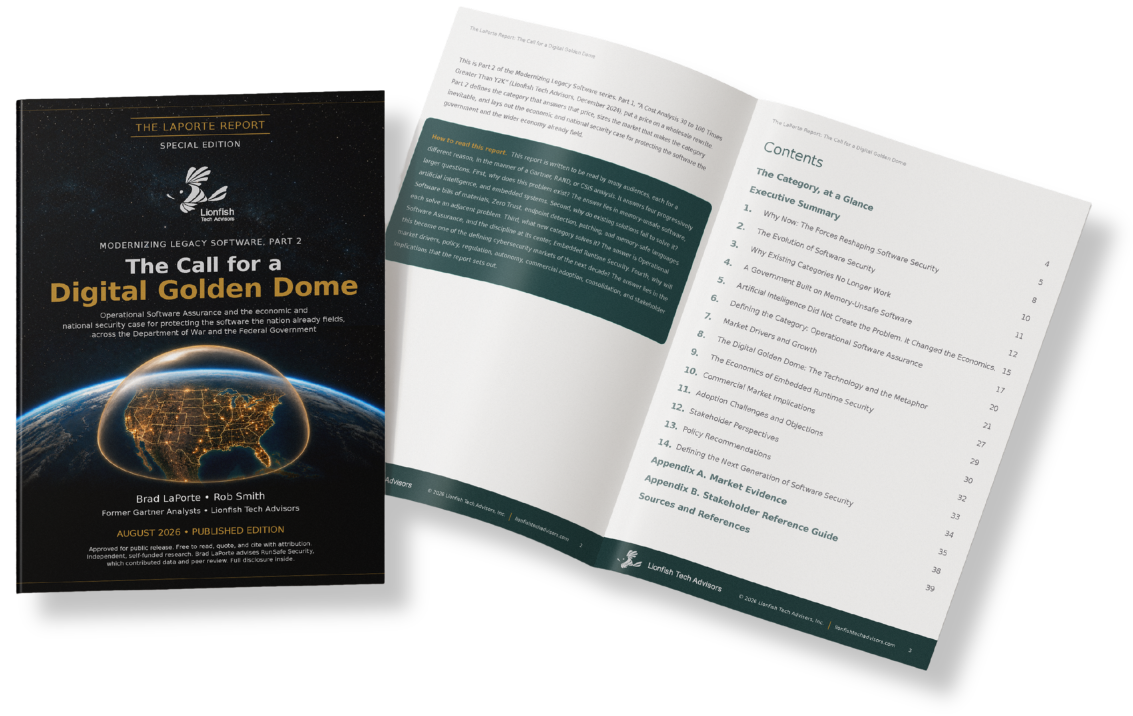
The LaPorte Report: The Call for a Digital Golden Dome
Published by Lionfish Tech Advisors
Lionfish Tech Advisors defines the emerging Operational Software Assurance category and explains why protecting deployed software has become a critical cybersecurity priority.
Introducing Operational Software Assurance
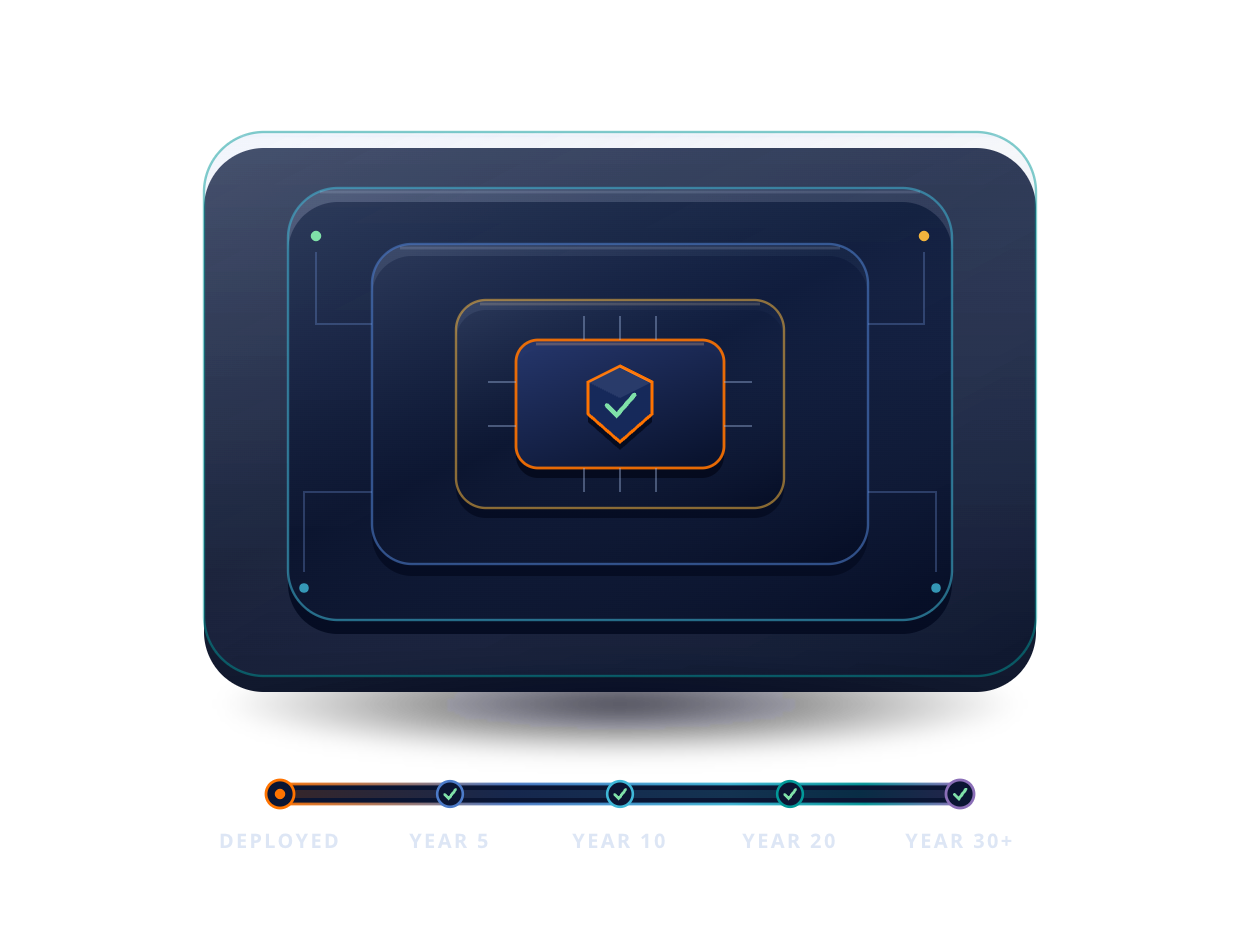
Operational Software Assurance (OSA) is the practice of keeping deployed software secure, protected, and compliant across its operational life.
It spans the full lifecycle from source to runtime, and it is delivered through three pillars: Identify, Protect, and Comply.

Why Now
AI Has Changed the Economics of Software Security
AI is accelerating vulnerability discovery and exploit development. But patching, testing, and certification cannot keep pace. Embedded Runtime Security closes the gap.
44%
of AI-generated code fails security testing, a rate essentially unchanged in four years.
Veracode, 2026
10x
more security findings came out of AI-assisted development by mid-2025, including a 322% rise in privilege-escalation paths.
Apiiro
~70%
of serious security vulnerabilities trace back to a memory-safety defect.
Microsoft and Google analyses
The Evolution of Software Security

Security has moved from the network, to the endpoint, to the software supply chain.
Operational Software Assurance takes the next step: protecting deployed software itself.
“Software security has moved from the network, to the endpoint, to the supply chain. The next step is protecting the software itself after it is deployed.”
Resources
Explore Operational Software Assurance
In the News


From the Blog

Why Critical Infrastructure Needs Operational Software Assurance
The world has changed, and software security has to change with it. Artificial intelligence is changing the risk profile of software by accelerating vulnerability discovery and exploit development. Geopolitical tensions are rising, putting more critical systems into...
FAQs
-
What is Operational Software Assurance?
Operational Software Assurance, or OSA, is the practice of keeping deployed software secure, protected, and compliant throughout its operational life.
Traditional Software Assurance focuses primarily on how software is built and acquired. OSA extends assurance into operations, addressing binaries, firmware, and fielded systems that may remain in use for years or decades and cannot always be easily rewritten or patched.
-
Why is Operational Software Assurance needed now?
The amount of deployed software is growing at the same time AI is making vulnerabilities easier to discover and exploits faster to develop.
Many embedded, certified, air-gapped, and mission-critical systems cannot patch at the same speed. Operational Software Assurance addresses the resulting gap by focusing on whether software remains secure and resilient after it has been deployed.
-
How is Operational Software Assurance different from traditional Software Assurance?
Traditional Software Assurance asks: Did we build and acquire the software securely?
Operational Software Assurance adds another question: Is that software staying secure, protected, and compliant while it is running in the field?
The two approaches are complementary. Software Assurance builds confidence before deployment; Operational Software Assurance sustains that confidence afterward.
-
Why isn't vulnerability management alone enough?
Finding vulnerabilities is important, but identifying a flaw does not make the software unexploitable.
As vulnerability discovery accelerates, organizations increasingly need to determine whether a vulnerability is actually present, reachable, and exploitable in the software they deployed and protect the system when remediation cannot happen immediately.
Operational Software Assurance shifts the focus from simply counting vulnerabilities to managing their real operational risk.
-
What is Embedded Runtime Security?
Embedded Runtime Security, or ERS, is the discipline within the Protect pillar of Operational Software Assurance.
It refers to active, in-place protections that make exploitation of deployed binaries and firmware more difficult or cause an exploit attempt to fail at runtime. These protections are designed for environments where changing source code, deploying traditional endpoint agents, or waiting for a patch may not be practical.
Software memory protection is a central capability within ERS.
-
What is the Digital Golden Dome?
The Digital Golden Dome is the policy metaphor Lionfish Tech Advisors uses for the runtime protection component of Operational Software Assurance.
Just as a physical defense system is designed to intercept a threat before it reaches its target, the Digital Golden Dome describes protections designed to prevent an exploit from successfully taking control of deployed software when an attack occurs.
-
How does RunSafe Security support Operational Software Assurance?
RunSafe’s work aligns most closely with the Protect pillar of Operational Software Assurance and the discipline of Embedded Runtime Security.
RunSafe focuses on reducing exploitability in deployed binaries and firmware, particularly in environments where software is difficult to patch, rewrite, or replace. Operational Software Assurance is the broader market category that spans Identify, Protect, and Comply.
Explore Operational Software Assurance
Learn why software security is expanding beyond how software is built to how it remains protected after deployment.